
The Origins, Flowering, and Documentary Afterlife of Yiddish Cinema
|
Lecture
Yiddish Civilization 101 Series Admission: Free |
In celebration of YIVO's 101st year, join us for our Yiddish Civilization 101 series. Each program will highlight key topics in Ashkenazi history and culture, including shtetl life, film, and Ashkenazi foodways, amongst others. Guided by expert scholars, each lecture will provide a greater understanding of Jewish life in Eastern Europe and its diasporas.
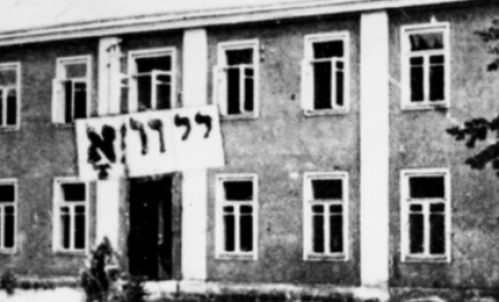
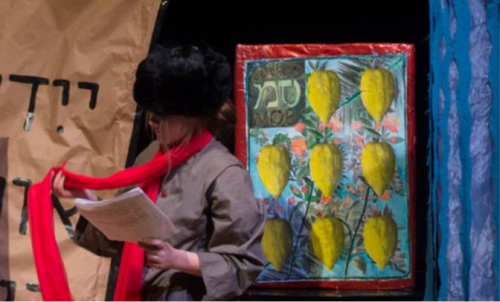
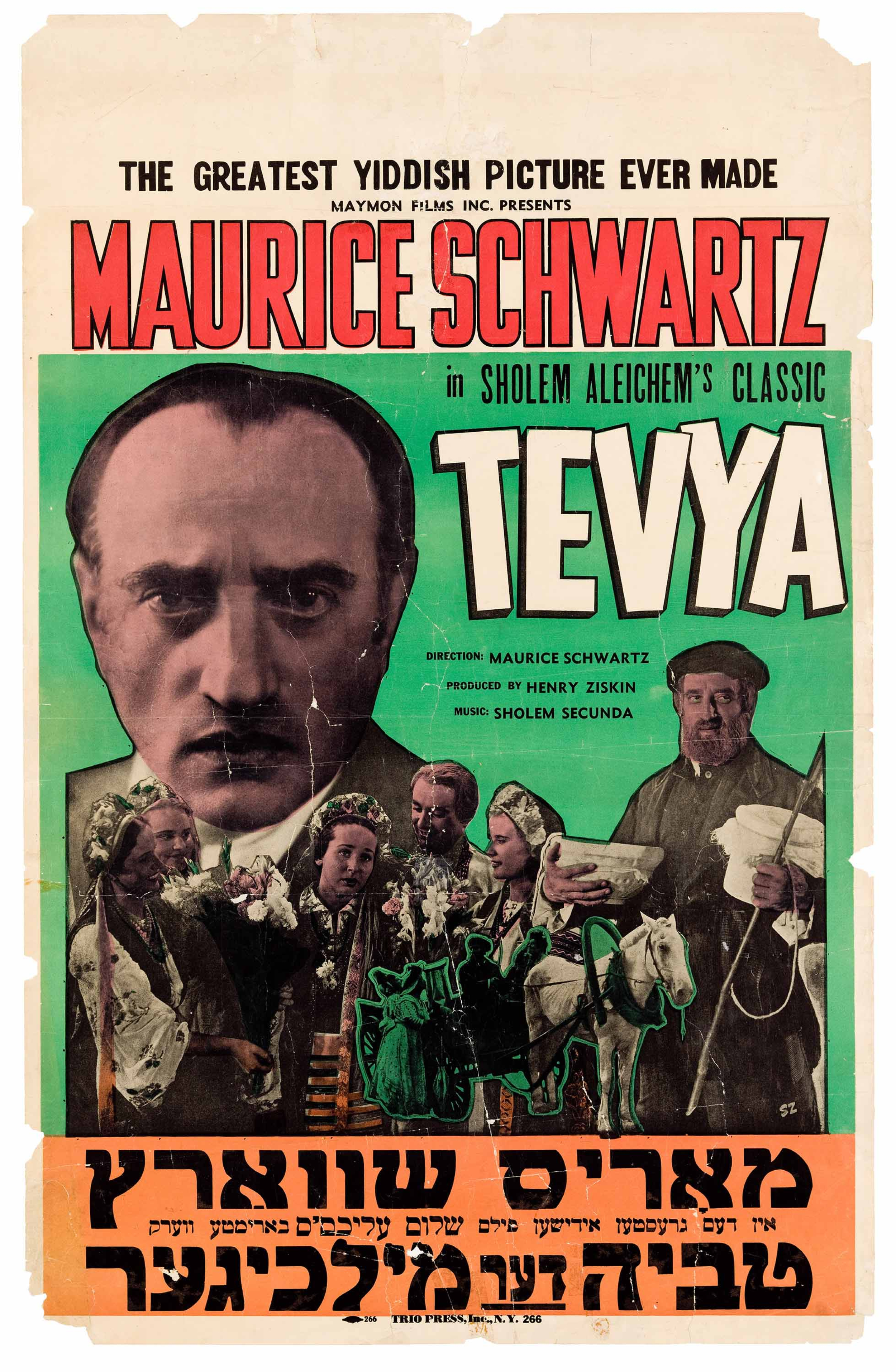
Born before World War I, the Yiddish cinema came to supplement—and in some places supplant—the Yiddish stage. Except for a brief period on the eve of World War II when new Yiddish talkies appeared in New York City movie houses virtually every month, the Yiddish cinema was a novelty of the marketplace. Addressing a need and operating on a shoestring, these motion pictures created a world; at once documentary evidence and fantasy projection, they spoke directly to their Ashkenazi Jewish audiences. Yiddish movies also belong to Polish, Soviet, and off-Hollywood American cinema, but taken on its own terms, with neither laughter nor through tears.
This lecture by J. Hoberman will discuss this unique episode in film history, an international enterprise that created a national cinema without a nation-state.
About the Speaker

J. Hoberman is an author, teacher, and film critic (33 years at The Village Voice). His many books include Bridge of Light: Yiddish Film Between Two Worlds, The Red Atlantis: Communist Culture in the Absence of Communism, and, with Jeffrey Shandler, Entertaining America: Jews, Movies, and Broadcasting, written for the 2003 exhibition at the Jewish Museum. A contributor to the YIVO Encyclopedia of Jews in Eastern Europe and POLIN Museum’s Legacy of Polish Jews, Professor Hoberman taught for many years at the Cooper Union, as well as NYU, the University of Hawaii, Harvard University and currently, Columbia University, where his most recent graduate seminars have been devoted to documentary activism. He continues to contribute film criticism to The Nation, The New York Review of Books, and The New York Times. His most recent book is Everything is Now: The 1960s New York Avant-Garde—Primal Happenings, Underground Movies, Radical Pop. Many years ago, he had a paid internship at YIVO.